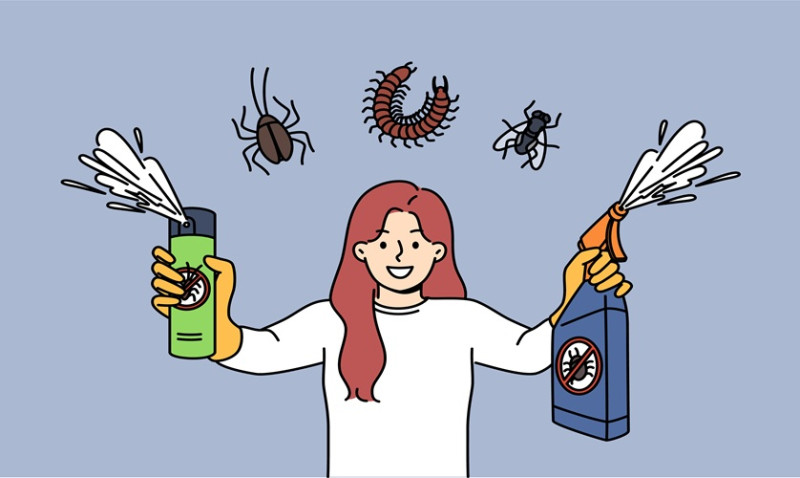
Getting a pest infestation sorted quickly is important. Your restaurant kitchen can't operate with rodents running across the prep surfaces. Your office building can't have staff complaining about cockroaches in the toilets. But rushing into a contract with the first pest control firm that answers the phone is how you end up with half-finished jobs, repeat infestations, and invoices that don't match what you agreed to.
The pest control sector has plenty of genuine, professional operators. It also has a fair share of cowboys who'll take your money and leave you worse off than when you started. A proper conversation before you sign anything takes maybe 20 minutes and could save you hundreds of pounds and weeks of frustration.
1. Are You Properly Insured and Licensed?
This isn't optional. Ask to see their public liability insurance certificate. The minimum is usually £6 million cover, though many reputable firms carry £10 million. If they're vague about it or say they'll send it later, walk away.
In England and Wales, pest control operators should be registered with the Health and Safety Executive or hold relevant qualifications under the Control of Pesticides Regulations 1986. Ask what their qualifications actually are. "I've been doing this for 20 years" is not a qualification.
2. What's Your Track Record With My Type of Premises?
A firm that's brilliant at treating residential properties might be useless in a food production facility. A contractor experienced with restaurant kitchens may have no idea how to tackle a warehouse infestation. Ask specifically about jobs similar to yours. How many? How recently? Can they provide references from comparable businesses?
If you're a pub owner with a rat problem, you want someone who understands the unique challenges of licensed premises, not someone whose main experience is suburban semi-detached houses.
3. What's Your Treatment Plan, Not Just Your Price?
Any contractor who quotes without visiting your site is guessing. Any contractor who visits but doesn't explain their approach is hiding something. Before you pay anything, you should understand exactly what they'll do. Will they use traps, rodenticides, or both? How often will they visit? What preparation do you need to do? How long before you see results?
A proper plan includes identifying entry points, discussing proofing work (which might be your responsibility), and setting realistic timescales. If someone promises a one-visit cure for a serious infestation, they're either lying or inexperienced.
4. Are You Using Approved Chemicals and Methods?
The UK has strict rules about which pest control products are legal. They change regularly. A contractor relying on outdated methods or restricted chemicals isn't just breaking the law, they're putting your customers and staff at risk. Ask what specific products they use and check you've actually heard of them. Request their Material Safety Data Sheets.
Also ask about their approach to safety around food preparation areas, if that applies to you. Using a broad-spectrum insecticide near exposed food is negligent. Good operators have protocols for this.
5. What Guarantees Do You Offer?
A written guarantee is standard in this industry. It should specify the period (typically 3 to 12 months), what's actually covered, and what happens if the problem returns. Some guarantees only cover treatment costs if you've failed to implement their recommendations on proofing or hygiene. Others are more comprehensive.
Get it in writing. "We'll come back for free if it happens again" means nothing unless it's documented. Ask how many revisits are included and what you'll pay if the problem persists beyond that. £200 for a revisit is normal. £800 is opportunistic.
6. How Often Will You Monitor and Report?
One-off treatments rarely work for serious infestations. Ask how many visits they plan to make and at what intervals. For a restaurant dealing with German cockroaches, weekly visits for four weeks followed by monthly checks is reasonable. For a minor rodent issue in a small office, monthly visits might be fine.
Also ask what kind of reporting you'll get. Written reports with photos are standard. Some operators provide online portals where you can track treatments and results. This matters because you might need evidence for food safety audits or environmental health inspections.
7. What's Your Policy on Recurring Problems?
Pest control isn't always straightforward. Sometimes an infestation comes back because the underlying cause (dodgy drainage, gaps in the building fabric, poor waste management) hasn't been fixed. Before this becomes your problem, clarify who's responsible for what.
If the pest returns because they didn't treat properly, that's on them. If it returns because you've ignored their advice about sealing entry points or cleaning up food waste, that's on you. Get this distinction clear upfront in writing.
8. What Emergency Call-Out Charges Apply?
A restaurant discovering rats at 9 pm on a Saturday can't wait until Monday. Ask what the out-of-hours call-out fee is. Many firms charge £150 to £300 for urgent evening or weekend visits. Some have regional operators available 24/7. Others won't touch emergency work at all.
Know this before you have a crisis. The stress of a sudden infestation is bad enough without discovering your contractor doesn't do nights and weekends.
9. Do You Handle the Paperwork and Compliance?
Depending on your industry, you might need documentation for food standards authorities, environmental health officers, or insurance purposes. Ask whether the contractor provides this automatically or if you need to request it. A professional firm keeps proper records and provides them without fuss.
If you're in hospitality or food production, this matters for your own compliance. You need proof that treatments happened, what was used, and when. Some operators build this into their service. Others charge extra. Find out which applies here.
10. How Will You Handle Communication and Complaints?
Who do you contact if there's a problem? Is it a single point of contact or a generic phone line? How quickly do they respond to complaints? A contractor who disappears after the invoice is sent is useless when something goes wrong.
Check their complaints procedure. Most professional pest control firms are members of trade bodies like the BPCA (British Pest Control Association) or the NPTA (National Pest Technicians Association). This gives you a formal route if things go wrong. Ask if they're members and what that means for you.
Getting It Right From the Start
A proper pest control firm will answer all of these questions readily. They'll provide written quotes, explain their methods, and outline guarantees. If you're getting evasive answers, vague promises, or pressure to decide immediately, that's your signal to look elsewhere.
The cheapest quote often becomes the most expensive mistake. Do the legwork now, have the conversation, and hire someone who actually knows what they're doing. Your business will be better for it.
Trending articles
-
 Business Rates and Inflation Squeeze: ...
Mar 2026
Business Rates and Inflation Squeeze: ...
Mar 2026
-
 WordPress vs Squarespace vs Wix for ...
Mar 2026
WordPress vs Squarespace vs Wix for ...
Mar 2026
-
 Why Pest Control Companies Need ...
Mar 2026
Why Pest Control Companies Need ...
Mar 2026
-
 Sole Trader or Limited Company? What ...
Mar 2026
Sole Trader or Limited Company? What ...
Mar 2026
-
 What to Expect When Hiring a Pest ...
Mar 2026
What to Expect When Hiring a Pest ...
Mar 2026
-
 Google Ads vs Facebook Ads for Pest ...
Mar 2026
Google Ads vs Facebook Ads for Pest ...
Mar 2026