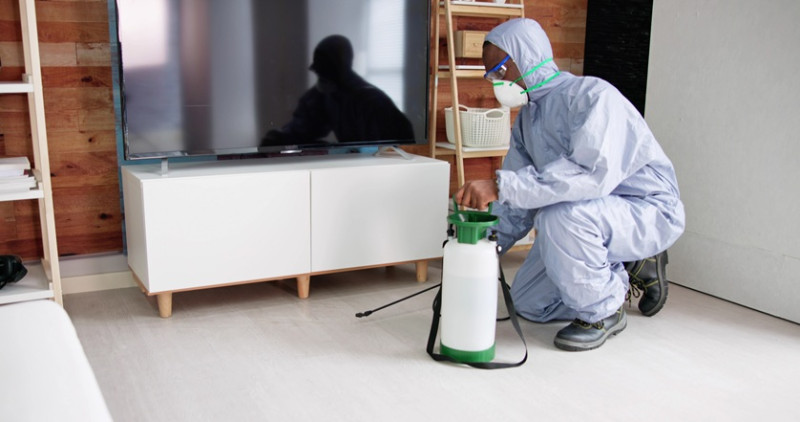
A customer rings at 11pm on a Saturday night. There's a rat in the kitchen. They're panicking. Your phone goes to voicemail, and they move on to the next pest control firm in Google results. That's a lost job, and you'll never know about it.
This is where chatbots get interesting for pest control businesses. A simple chatbot sitting on your website could answer that midnight call. Not with a human voice, but with immediate responses to common questions: "What's your call-out charge?", "Can you come out tomorrow?", "Do you cover my postcode?", "What areas do you treat?".
The numbers suggest this matters. According to research from Zendesk, 54% of UK businesses report that customers expect 24/7 support. If you're running a pest control operation with a tight team, that expectation becomes an impossible standard. A chatbot lets you meet it without hiring night staff.
There's also the efficiency angle. Your phone lines currently handle repetitive queries. A booking query. A price question. A follow-up about treatment types. If your chatbot handles even 30% of these, your team spends less time on incoming calls and more time actually treating properties. At £8 to £12 per hour, that's meaningful labour savings.
The Real Costs and Limitations
But let's be honest. Most chatbot solutions start at £30 to £50 monthly for basic versions. Premium options, especially those built for lead capture in service industries, run £100 to £300 monthly. For a three-person pest control operation, that's not trivial money.
Then there's the work upfront. A chatbot needs training. You have to feed it your FAQs, your service areas, your pricing, your availability. You need to decide what it should say when someone asks about rat control versus wasp nests. Should it offer a quote estimator? Route customers to a booking form? Collect their details for a callback?
Most importantly, your chatbot is only as good as the information you give it. If it tells someone you cover Manchester when you only cover the city centre, you've created a customer service problem, not solved one. If it promises a 24-hour response when you actually work weekdays only, you're setting false expectations.
There's also the reality that many chatbots still feel wooden and unhelpful. Users know they're talking to software. They'll tolerate it for basic information, but the moment they have a specific problem (like needing emergency out-of-hours treatment), they want a human. A frustrating chatbot experience can actually drive customers away.
When a Chatbot Actually Works for Pest Control
The businesses getting real value from chatbots tend to have certain characteristics.
First, they get high volumes of the same questions. If you're fielding the same five queries ten times a day, automation pays dividends. Queries like "What's included in a survey?", "How long does treatment take to work?", "Are your chemicals safe for pets?". These are golden chatbot material.
Second, they use it for lead capture, not replacement support. A chatbot that collects contact details and service requests, then passes them to your team, works better than one trying to actually solve problems. You're not replacing your expertise. You're pre-qualifying leads and gathering information before your team member rings back.
Third, they integrate it with their booking system. If your chatbot can check your calendar and actually book someone in for a survey without human intervention, that's genuinely useful. Customers get instant confirmation. You get their details automatically logged.
Some pest control firms have reported that a chatbot reduced their administrative overhead by 5 to 8 hours weekly. That's a cleaner saving than nebulous talk of "improved engagement".
The Practical Alternative
Before committing to a chatbot, consider whether simpler steps might solve your problem. A clear FAQ page, well-organised and easy to navigate, handles a lot of the same questions. A booking button that takes people to a calendar system (like Calendly or your scheduling software) removes friction without the chatbot cost.
An auto-responder email system that sends price lists and service area maps within minutes of an enquiry also works. It's not flashy, but it's effective and costs almost nothing.
Some pest control firms have had success with WhatsApp Business integration instead of a website chatbot. Customers message you directly, and your team responds during working hours with automatic acknowledgement messages saying when they'll hear back. It's lower-tech but often feels more natural to customers.
So Should You Get One?
If you're a one or two-person operation handling all calls yourself, a chatbot probably isn't worth the hassle. Your time is better spent treating properties and building your customer base through word of mouth and results.
If you're bigger, with 4+ team members and high enquiry volume, a straightforward chatbot that captures details and routes leads to your team could genuinely save time. Budget for about two hours monthly maintaining and updating it with new information.
Be specific about what you want it to do. Don't let a supplier convince you that a chatbot will "transform engagement" or "revolutionise customer experience". It won't. What it might do is answer the same question 20 times so your team doesn't have to.
Try it for three months on a low-cost plan. Track how many conversations it has. How many lead forms it completes. Whether those leads actually convert. If the numbers justify the cost, keep it. If not, you've only lost £100 to £150.
A chatbot isn't magic. But for the right pest control operation at the right stage of growth, it's a reasonable tool that does one job efficiently. Don't invest in it expecting miracles. Invest in it because you have a specific problem it actually solves.
Trending articles
-
 Business Rates and Inflation Squeeze: ...
Mar 2026
Business Rates and Inflation Squeeze: ...
Mar 2026
-
 WordPress vs Squarespace vs Wix for ...
Mar 2026
WordPress vs Squarespace vs Wix for ...
Mar 2026
-
 Why Pest Control Companies Need ...
Mar 2026
Why Pest Control Companies Need ...
Mar 2026
-
 Sole Trader or Limited Company? What ...
Mar 2026
Sole Trader or Limited Company? What ...
Mar 2026
-
 What to Expect When Hiring a Pest ...
Mar 2026
What to Expect When Hiring a Pest ...
Mar 2026
-
 Google Ads vs Facebook Ads for Pest ...
Mar 2026
Google Ads vs Facebook Ads for Pest ...
Mar 2026