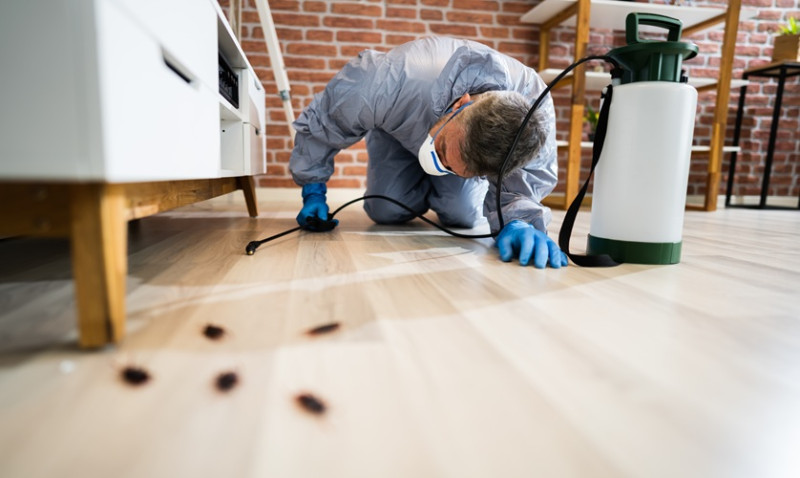
You've just treated a commercial kitchen for cockroaches. The manager is relieved. The problem's solved. Three weeks later, you check your Google Business Profile and notice you still have only seven reviews. A competitor across town has forty-three.
This happens constantly in pest control. Customers are happy to hire you, but they rarely think to leave a review unprompted. They've moved on to their next problem. Meanwhile, potential clients searching for "emergency pest control near me" are choosing your competitors because they have more visible social proof.
The temptation is real. You could offer a discount for reviews. You could ask staff to create fake accounts. You could even buy reviews from dodgy services online. Don't. These tactics breach Google's policies, damage your professional reputation, and they work against you long-term.
Instead, you need a system that feels natural to your business and actually works.
Why Google Reviews Matter More Than You Think
Google reviews don't just look nice. They're search visibility. A study by SEMrush in 2023 found that businesses with regular reviews rank higher in local search results. For a pest control company, this means your Google My Business profile appears above competitors when someone in your service area searches for fumigation, wasp removal, or rodent control.
Reviews also build trust with people who've never heard of you. A residential client with a rat problem isn't going to ring a pest control firm with two reviews and no comments. They want to see patterns. Are you reliable? Do you show up on time? Did you actually solve the problem or just spray and leave?
The other factor: Google's algorithm learns from engagement. More reviews mean more interaction with your Business Profile, which signals that you're an active, legitimate business.
The Ethical Foundation
Before you implement anything, understand what "ethical" actually means here. You're asking genuine customers for honest feedback. That's it. You're not incentivising positive reviews or negative ones. You're not fabricating experiences. You're not pretending to be someone else.
Google's guidelines are clear on this. You can ask for reviews. You can make that process easy. You cannot offer rewards, discounts, or entry into prize draws specifically for leaving a review. You can offer a general discount to all customers, but it can't be conditional on them reviewing you.
Respect that boundary and you'll build something sustainable.
The Timing and Method That Works
The golden window for asking is when the customer is most satisfied. For pest control, that's usually 5 to 7 days after your treatment. The immediate problem is solved but still fresh in their mind. They've had time to confirm the treatment worked. They're not overwhelmed by your presence anymore.
If you're doing residential work, email is your friend. Get the email address during the booking process (you already do this). Three days after the job is completed, send a brief, genuine message. Don't write "Please leave us a review on Google so we can beat our competitors." That's transparent about your motives and off-putting. Instead, try something like this.
"Hi Sarah, we hope the wasp nest treatment went smoothly. We'd genuinely appreciate it if you had a moment to share your experience on our Google Business Profile. It helps other homeowners in the area find us." Then provide a direct link to your profile.
For commercial clients, a phone call works better. Ring them a week after treatment. Chat about whether the cockroach problem has cleared. Once they've confirmed it has, say casually, "Would you mind leaving a quick note on Google about us? It really helps." Most will say yes if you've done good work.
Text message is increasingly effective too. Include a short personalised message and a link. Response rates are high because it's informal and low friction.
Make It Dead Easy
Don't ask for reviews and make people hunt for your profile. Provide a direct link every single time. Your Google Business Profile has a shareable URL. Put it in email signatures. Print it on invoices. Add it to your van. The easier you make it, the higher your response rate.
If you're using a scheduling or invoicing system like ServiceTitan or Workiz, set up automated review requests. These can go out immediately after a job is marked complete. You set the message once and it sends to every customer. It feels personal because it arrives at the right moment, even though you're not manually sending it.
Some platforms integrate directly with Google's review system, which means customers can leave a review with just two clicks. That matters. People won't write a 200-word essay about your rodent control work. But they might give you four stars and write two sentences if it takes 20 seconds.
Train Your Team to Mention It
Your field staff are your biggest asset here. When they're on a job, they're building the relationship. The technician who explains what they've done, answers questions professionally, and leaves the site clean is the one who's earned a positive review. They should absolutely mention it before they leave.
A simple line works. "Thanks for letting us sort that out. If you get a moment, a review on Google really helps us out." That's it. No pressure. No incentives. Just a straightforward ask from someone who's just done good work.
Train your team on this. Make it part of your standard closing routine, like the invoice. Some businesses even add it to their checklist apps so technicians remember to mention it.
What About Negative Reviews
You'll get them. Maybe the treatment didn't work as fast as the customer expected. Maybe they felt the price was high. Maybe you missed a callback. It happens.
Respond to negative reviews within 48 hours. Take it offline. "We're sorry to hear this didn't go as planned. Can you call us on [number] so we can make it right?" This shows potential customers that you care about service recovery, not just the positive feedback.
Don't argue with reviewers. Don't ask them to delete reviews (Google forbids this anyway). Just respond professionally and move on.
The Realistic Timeline
You're not going to jump from seven reviews to forty in a month. Real, earned reviews take time. If you're consistently asking customers and getting a 10 percent response rate, you'll add maybe two or three reviews per month from fifty jobs. After six months of consistent effort, you'll have a healthier profile. After a year, you'll start seeing real movement in local search rankings.
That's actually the point. This works because it's sustainable and it's real.
Trending articles
-
 Business Rates and Inflation Squeeze: ...
Mar 2026
Business Rates and Inflation Squeeze: ...
Mar 2026
-
 WordPress vs Squarespace vs Wix for ...
Mar 2026
WordPress vs Squarespace vs Wix for ...
Mar 2026
-
 Why Pest Control Companies Need ...
Mar 2026
Why Pest Control Companies Need ...
Mar 2026
-
 Sole Trader or Limited Company? What ...
Mar 2026
Sole Trader or Limited Company? What ...
Mar 2026
-
 What to Expect When Hiring a Pest ...
Mar 2026
What to Expect When Hiring a Pest ...
Mar 2026
-
 Google Ads vs Facebook Ads for Pest ...
Mar 2026
Google Ads vs Facebook Ads for Pest ...
Mar 2026