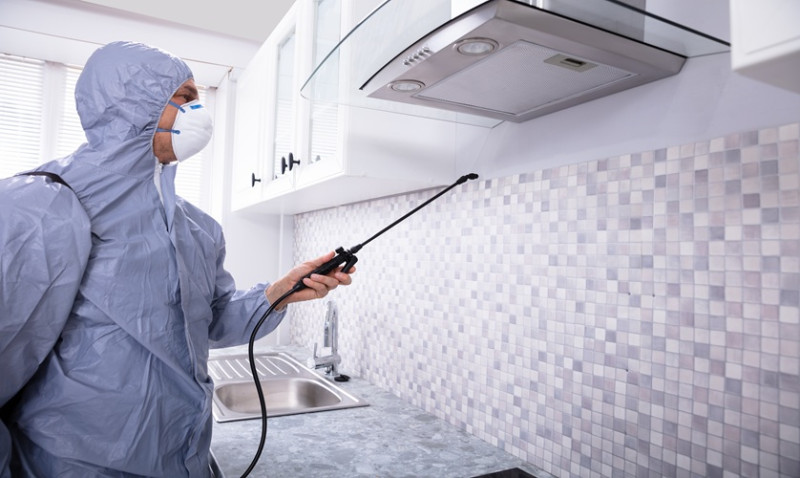
You're good at what you do. You've handled countless rodent infestations, cleared wasp nests from awkward locations, and kept commercial kitchens pest-free. But if someone in your area searches "pest control near me" or "emergency rat removal in [your town]", are they finding you? Probably not. And if they're not finding you, they're finding your competitors.
Your Google Business Profile is the first thing potential customers see when they search for pest control services locally. It's not optional. It's the difference between a phone ringing and silence.
Why Your Current Profile Isn't Working
Most pest control businesses have a Google Business Profile. Most of them are incomplete or outdated. Here's what we see regularly: empty description fields, photos from 2019, no posts, and phone numbers that ring through to voicemail.
Google changed how it ranks local businesses again in 2025. The algorithm now rewards profiles that look actively maintained. If your profile hasn't been touched in months, Google assumes you're either closed or don't care about online presence. Neither impression helps you.
Start With Your Basic Information
Before you do anything fancy, get the fundamentals right.
Your business name needs to match what's registered at Companies House and what customers actually call you. If you operate as "Smith's Pest Control" but your legal name is "Smith Property Services Ltd", use your trading name in the profile. Consistency matters across the web.
Your address should be your actual office location. If you work from home, Google allows service area businesses to hide their address while still serving your local area. Set your service radius clearly. If you cover Merseyside, say so. If you only work within 15 miles of Manchester, set that boundary. Being honest about your coverage area keeps you from wasting time on calls from people you can't help.
Your phone number must be answered during stated hours. Use a dedicated business line, not your personal mobile. When someone books an emergency wasp removal at 8pm and gets through to your voicemail, they're already dialling the next pest controller on the list.
Write a Description That Actually Converts
Your business description is not a place for keyword stuffing. Google's system can tell when you're being natural versus when you're cramming in "residential pest control services", "commercial pest management", and "emergency rat extermination" like you're filling a checklist.
Write like you're telling a customer what you do. Here's a real example that works:
"We handle everything from rodent infestations to commercial pest prevention. Same-day responses available for emergencies. Fully insured and trained to British Pest Management Association standards. We serve homes and businesses across Greater London."
That's 40 words. It tells people what you do, your availability, your credentials, and your coverage area. It's searchable without being obviously optimised.
Photos Actually Matter Now
You need at least 10 recent photos on your profile. Not stock images. Real photos of your work.
Include: your team in uniform, your van branded with your details, office interior, equipment you use, before-and-after photos from jobs you can share legally, team members in the field. Rotate them every few weeks. Google's algorithm actively checks when photos were added.
If you did a successful rat infestation treatment, take photos of the bait stations, the sealed entry points, the traps. A photo labeled "Rodent infestation treatment completed" tells far more than text alone.
For commercial work like restaurant pest prevention, a photo of your technician conducting an inspection shows professionalism and expertise.
Get Your Categories Right
You're allowed multiple categories. Use them. Primary category should be "Pest control service". Add secondary categories like "Commercial pest control" or "Wildlife control" if they apply to your work. Don't invent categories that don't exist just to rank for keywords.
Posts Are Where You Gain Ground
Most pest control businesses never use Google's posts feature. That's your competitive advantage.
Post once every two weeks about something useful. Not promotional junk. Useful information:
- "Why you're seeing more rodents in autumn and what to do about it"
- "Wasp nest removal: what happens after we've treated it"
- "5 signs you have a bed bug problem before it spreads"
- "Which pest control methods are safe around pets"
Each post can be 300 words. Link them to your website if you have relevant content. Google rewards profiles with regular posts because they signal an active business.
Respond to Every Review, Immediately
You'll get reviews. Some will be five stars. Some won't be. Respond to all of them within 24 hours.
For good reviews, thank them genuinely. Reference the specific work you did. "Thanks for the kind words. Glad we sorted out the wasp nest safely before it caused problems." This shows other potential customers that you're attentive.
For negative reviews, don't get defensive. Respond professionally. "Sorry the first visit didn't meet expectations. Please get in touch so we can make it right." Taking complaints seriously signals confidence in your work.
Reviews affect your ranking directly. Businesses with regular recent reviews rank higher than those with none.
Track What's Actually Happening
Google Business Profile has a basic analytics section. Check it monthly. You'll see how many people called you, requested directions, or clicked your website from your profile.
If lots of people are viewing your profile but not calling, your phone number or service area might be unclear. If nobody's finding you, your keywords and description need work.
The Ongoing Work
Optimising your profile isn't something you do once and forget. Google expects you to maintain it. Update your hours if you change them. Add new photos quarterly. Post regularly. Respond to reviews within hours.
A well-maintained profile takes 30 minutes per week. A neglected one costs you customers every single day.
Start today. Update your description. Add those 10 photos. Schedule your first post. In three months, you'll see the difference in your call volume. In six months, people will be finding you instead of your competitors.
Trending articles
-
 Business Rates and Inflation Squeeze: ...
Mar 2026
Business Rates and Inflation Squeeze: ...
Mar 2026
-
 WordPress vs Squarespace vs Wix for ...
Mar 2026
WordPress vs Squarespace vs Wix for ...
Mar 2026
-
 Why Pest Control Companies Need ...
Mar 2026
Why Pest Control Companies Need ...
Mar 2026
-
 Sole Trader or Limited Company? What ...
Mar 2026
Sole Trader or Limited Company? What ...
Mar 2026
-
 What to Expect When Hiring a Pest ...
Mar 2026
What to Expect When Hiring a Pest ...
Mar 2026
-
 Google Ads vs Facebook Ads for Pest ...
Mar 2026
Google Ads vs Facebook Ads for Pest ...
Mar 2026